


What if the thing fueling your ambition is also quietly draining it?
That’s the quandary that sits at the center of the conversation I had with Jeff Boyd, Co-Founder, MTE (More than Energy). He is someone who has lived on both sides of the equation.
Before co-founding MTE, he helped scale a logistics company across 100+ countries, saying “yes” to opportunity before knowing how it would work. It’s the kind of scrappy, figure-it-out-as-you-go mindset you see in companies like Airbnb in its early days, say yes, then figure it out afterwards. That line of thinking worked. The company grew, thrived, and ultimately exited.
But here’s the twist: success didn’t feel like success.
Behind the scenes, Jeff was running on fumes powered by stress, caffeine, and the cultural belief that burnout is just the cost of ambition.
And that realization became the basis for something entirely different, where obsession became a business.
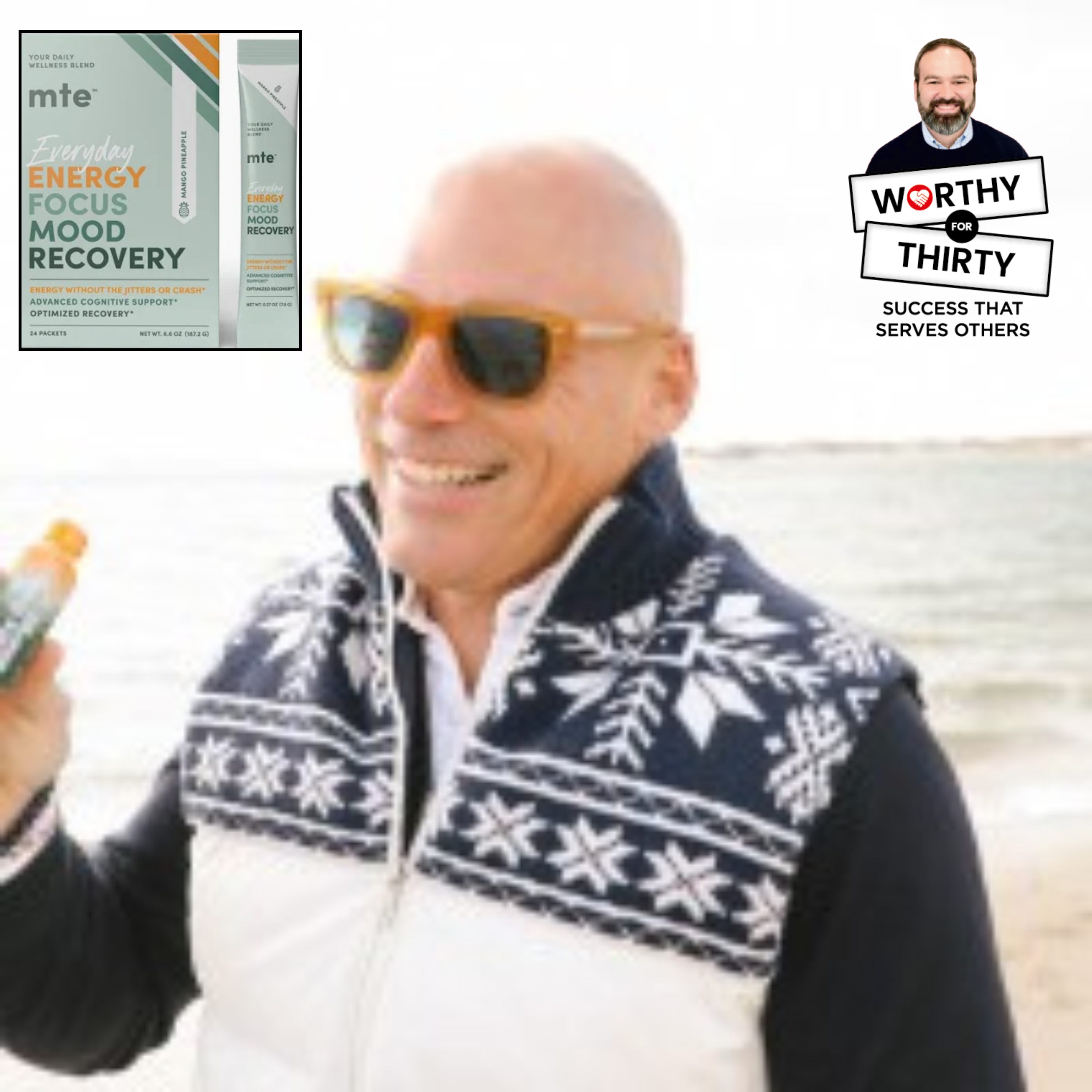
From “Say Yes” to “Something’s Off”
In his first company, Jeff helped build a global operation by refusing to say no. A call from North Carolina? Yes. A shipment to France? Yes. Cape Verde? Sure—then figure out where it is.
That relentless bias toward action is something you’ll recognize in companies like Amazon, which obsess over the customer and then build the infrastructure to support them.
But while the business scaled, something else quietly broke: his energy.
Not the hustle. Not the drive. The foundation underneath it.
“From the outside, I looked like I was in my prime. Internally, I was just fried.” - Jeff Boyd, Co-Founder, MTE
It’s a familiar story for high performers. You win externally while losing internally—and you don’t even notice until you stop.
The Real Problem: Not Lack of Energy, But How We Get It
What Jeff discovered wasn’t just personal; it was systemic.
We’ve built an entire culture around stimulation over sustainability.
Coffee → energy drink → afternoon crash → repeat.
It’s a loop. A flywheel. And not the good kind.
Think about how Starbucks became a global staple, not just by selling coffee, but by embedding itself into daily ritual. Now layer in modern hustle culture, and suddenly energy isn’t optional; it’s survival.
But Jeff saw the gap:
What if energy didn’t have to come with a crash?
Building MTE: A Product That Starts With “No”
Where most brands begin with price points and margins, Jeff started somewhere else entirely:
“I just wanted to build the perfect product for myself.”
That meant saying no a lot.
No caffeine
No sugar
No artificial sweeteners
No cutting corners on ingredients (even expensive ones like saffron)
This is where the story starts to mirror brands like Patagonia, build with conviction first, optimize later. The product becomes the marketing.
And it worked.
Instead of chasing trends, MTE built something fundamentally different:
Energy without spikes
Focus without jitters
Recovery is built into the experience
Not a quick fix, rather a system upgrade.
The Founder Advantage: Not Knowing the Rules
One of the most powerful threads in this conversation is Jeff’s “outsider advantage.” Sound familiar? Marcin and Amit from Mission Craft Cocktails also had the same epiphany and stance.
He didn’t come from the supplement industry. He didn’t know the “right” way to do things.
Which meant he didn’t inherit the same limitations.
It’s the same pattern we saw with Warby Parker disrupting eyewear or Dollar Shave Club rethinking grooming—fresh eyes create better questions.
And better questions lead to better products.
While others asked:
“How do we make this cheaper?”
Jeff thought:
“I didn’t start with price. I just wanted to build the perfect product for myself, and then we’d figure the rest out.”
That shift changes everything.
The Lesson Most Founders Miss
There’s a moment in the conversation that deeply resonates:
Jeff and his team did extensive research. Thousands of surveys.
Customers said:
“If it works, I don’t care how it tastes.”
Reality?
They absolutely cared.
It’s a classic founder lesson, one that companies like Netflix learned early when user behavior contradicted stated preferences.
People don’t always tell you the truth. Their actions do.
Instead of resisting that insight, Jeff leaned into it.
Made the product taste great.
Turned a weakness into a strength.
That’s the difference between a product people try—and one they stick with.
Redefining Energy (and Success)
Zoom out, and this isn’t just a story about supplements.
It’s about identity.
Who are you when you’re not running on stress?
What happens when your baseline isn’t burnout, but balance?
Jeff’s vision for MTE isn’t to win shelf space.
It’s to reshape how we think about energy altogether.
Not:
“How do I get through the day?”
But:
“How do I feel good while doing it?”
That’s a much bigger game.
So…Where Do You Start?
If you’re building something, or even just trying to rebuild your own energy, Jeff’s philosophy is surprisingly simple:
1. Stop Borrowing From Tomorrow
If your current system creates crashes, it’s not sustainable.
Whether it’s your business model or your daily routine—fix the foundation first.
2. Build (or Choose) for How You Want to Feel
Not just output, but experience.
Energy, focus, clarity, and recovery should work symbiotically, not against each other.
3. Start, Then Learn Fast
You don’t need a perfect plan. You need momentum.
Clarity comes from action, not overthinking.
At its core, this episode is a reminder:
You can scale a business.
You can win the game.
But if you’re not careful, you might build it on a system that can’t sustain you or isn’t authentic to you or aligned with your core fundamental values.
Jeff Boyd chose to rebuild that system, from the inside out.
And that might be the most valuable kind of entrepreneurship there is.


