

Removing Pain
When a child goes to sleep on a floor, a couch, or a pile of clothes, something far deeper than comfort is missing. It is hard to overstate what a bed means: safety, dignity, rest, routine, and the quiet belief that home is a place that holds you.
That is the heart of my conversation with Luke Mickelson, Founder of Sleep in Heavenly Peace, the nonprofit that began with one simple act of service and grew into a national movement serving children in more than 350 chapters across the U.S. and beyond. What started as a local response to a child in need became a model for how purpose, community, and operational clarity can scale in ways that change lives.
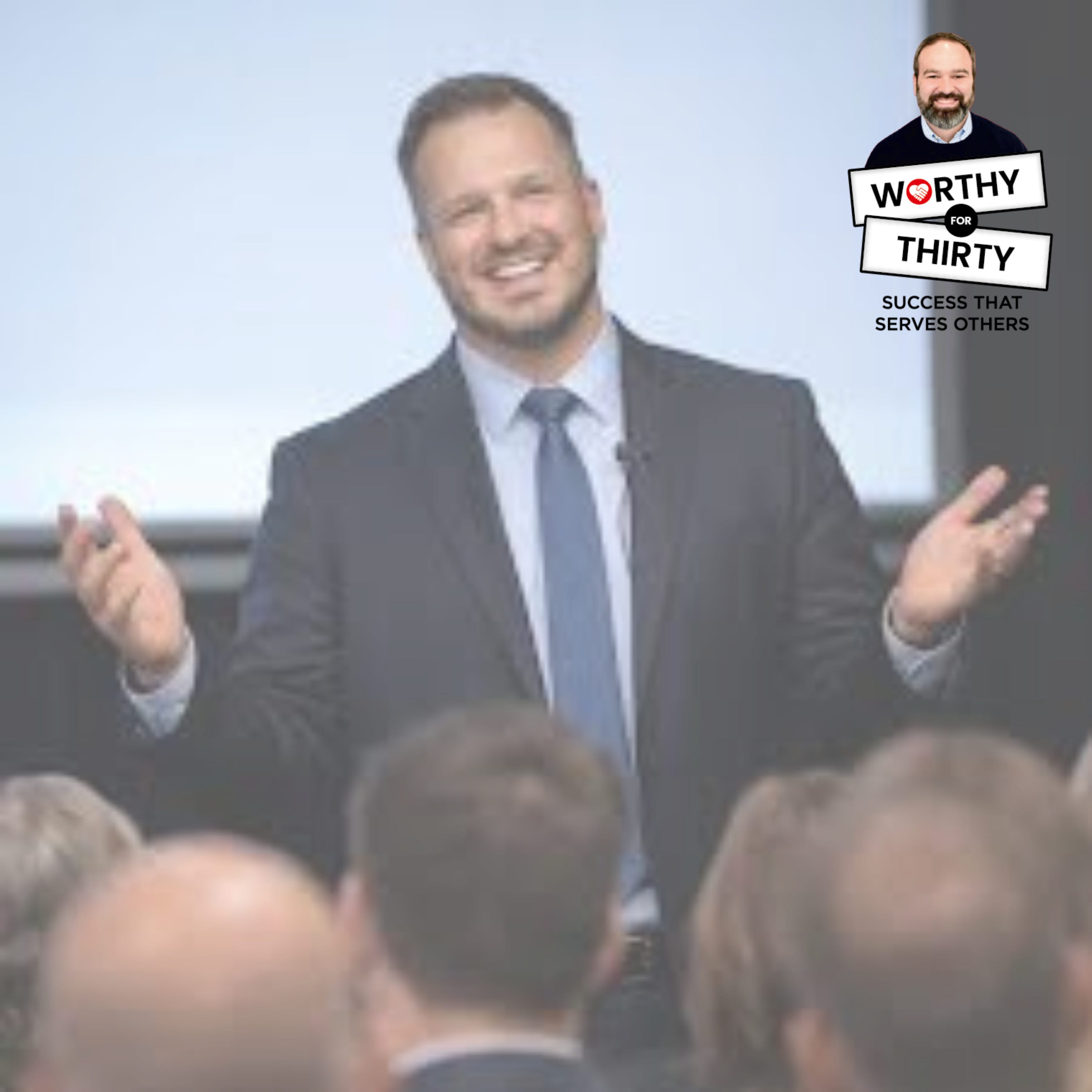
Luke’s story is compelling because it is grounded in something many leaders understand naturally: once you see a problem and truly feel it, you are no longer free to dismiss it. In the episode, he describes discovering that children in his own town were sleeping on floors, on pallets, and on makeshift bedding, and how that realization turned a garage project into a mission with lasting impact. That same pattern shows up in other community responses, like One House at a Time’s Beds for Kids program in Philadelphia, which has provided beds and bedding to more than 15,000 children and youth since 1998.
The need is bigger than most people realize. Sleep in Heavenly Peace says roughly 2-3% of American children are without beds, a figure that becomes even more sobering when paired with the broader reality that millions of children live in poverty and that sleep deprivation is already widespread among young people. The CDC has reported that more than three-quarters of high school students were not getting enough sleep during the COVID-19 pandemic, and students sleeping less than seven hours were more likely to report poor mental health and difficulty doing schoolwork. In other words, bedlessness is not just isolated to housing, it affects education, physical health, and, invariably, a child’s future.
“Big moments result from tiny moments in action, right?” - Luke Mickelson
Luke also offers something especially valuable for founders, owners, and operators: a practical operating philosophy. He illustrates how the mission becomes stronger when it is made tangible, repeatable, and local. Sleep in Heavenly Peace did not try to solve everything at once; it built a chapter model, empowered communities to own the work, and turned volunteer energy into a scalable system. That is a lesson that applies just as much to for-profit leadership as it does to nonprofit work.
What This Teaches Leaders
Luke’s approach points to short but clear takeaways that leaders can apply right now:
Make the problem visible. Luke did not build a brand around theory; he built it around a real child, a real need, and a real community response.
Turn service into an operating system. Sleep in Heavenly Peace grew because it created a chapter model that allowed others to participate without centralizing every decision. Therefore, equipping people to solve the problem in their own towns, not just admire the problem from afar
Let the mission do the marketing. When people understand the impact, they want to help, and the mission becomes the message.
Use emotional clarity to drive practical action. The strongest movements do not begin with complexity; they begin with a problem people obsess about.
For nonprofit leaders, that means designing an organization that is easy to join, easy to fund, and easy to trust. For for-profit leaders, it is a reminder that people rally behind businesses that stand for something concrete and human. Luke’s story provides evidence that a company or cause becomes more powerful when it moves from abstraction to clear action.
Why It Matters
A bed may seem simple, but for a child, it can change the entire rhythm of life. Safe sleep supports emotional regulation, physical health, and learning readiness, while chronic sleep loss has been linked to behavior challenges, mental health strain, and difficulty in school. When a child finally gets a bed, they are not just receiving furniture; they are receiving a place to rest, recover, and grow.
“If you want true joy in this life, you got to stop thinking about yourself, and see how you can help someone else.” - Luke Mickelson
There is also a sobering operational truth in Luke’s work: the demand is still enormous. Sleep in Heavenly Peace’s own reporting has highlighted a significant waiting list and a need that far outpaces current capacity, which is why the chapter model matters so much. This is what scalable compassion (empathy + action) looks like: not just feeling the need, but building infrastructure that helps more people respond to it.
How To Apply It
If Luke’s episode leaves a mark, the next step is action. Here are a few ways to put the insights into practice:
Audit your own mission for hidden pain points. Ask what need you are solving that people may not fully see yet.
Create a simple entry point for participation. Whether it is volunteering, donating, or partnering, make it easy to take the first step.
Build a local activation model. Local leaders often move faster and care more deeply because they are closest to the problem.
Pair the story with data. The emotional pull becomes stronger when it is reinforced by credible third-party evidence.
Treat generosity like an operating principle, not a campaign. Luke’s model shows that sustainable impact comes from consistency, not one-off events.
If you lead a team, use service as culture-building. Shared work toward a meaningful goal can deepen loyalty, purpose, and trust.
Luke Mickelson’s story is a reminder that some of the most important work in the world begins quietly, in a garage, with a question most people overlook. And sometimes, changing a child’s night changes their entire future.


