


The Big Idea
What if the future of social connection isn’t about what’s in your glass, but how it makes you feel?
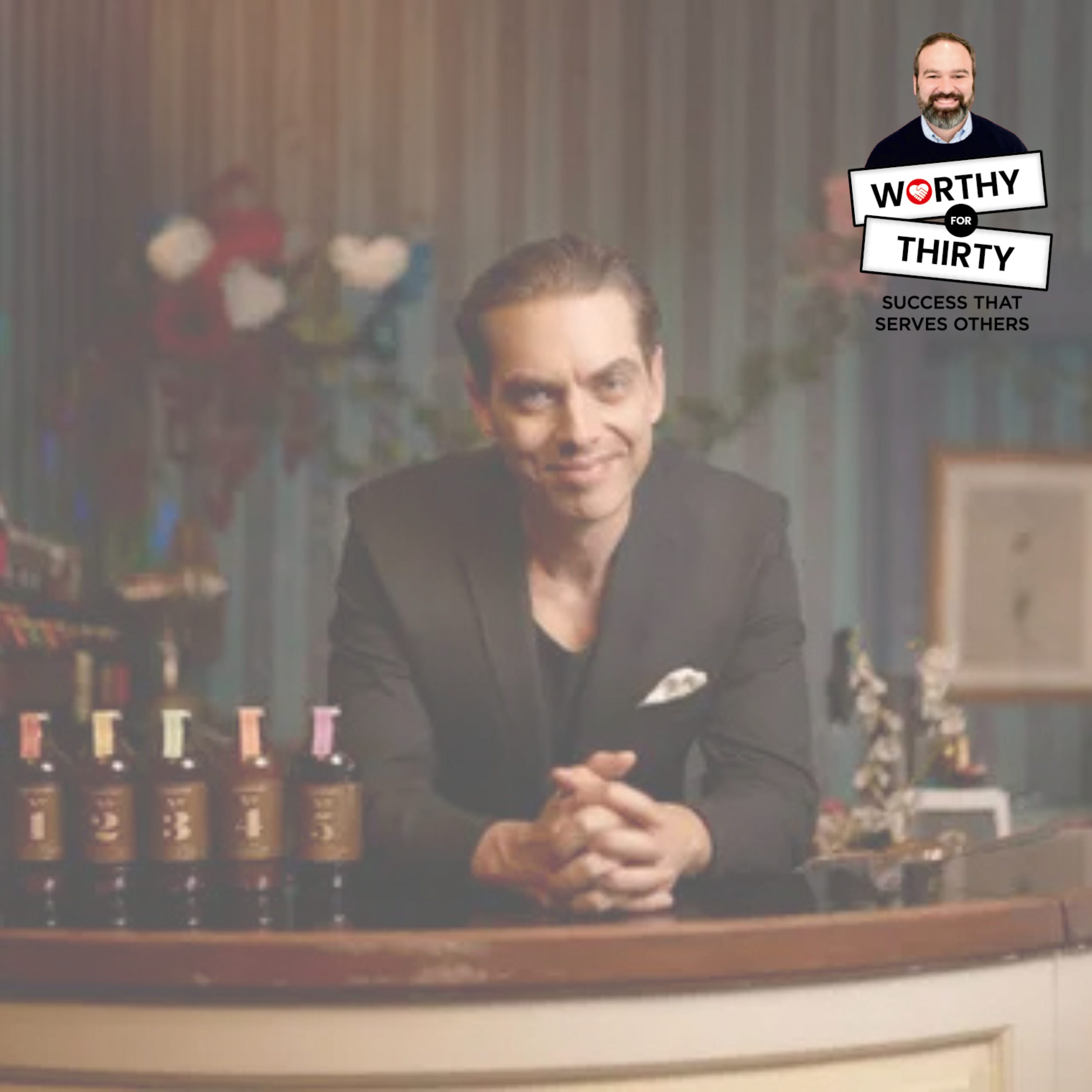
In this episode of Worthy for Thirty, I sat down with J.W. Wiseman, founder of Curious Elixirs, to unpack a deceptively simple idea: the most powerful businesses don’t just solve a problem, they reimagine a behavior.
Use code THIRTY10 at checkout for $10 off orders of $50 or more
Curious Elixirs isn’t just a non-alcoholic beverage company. It’s a cultural intervention steeped in presence, intentionality, and the belief that rituals matter more than substances.
For founders, operators, creators, and marketers, this conversation is a masterclass in building something that doesn’t just compete but reframes the category entirely.
“We’re 11 years into a 40-year mission to transform how we drink socially.” - JW Wiseman
The Throughline: Build for How People Want to Feel
J.W.’s journey didn’t start with a market gap. It started with a personal inflection point: after a night of 20 drinks and no hangover, something felt off, not physically, but existentially.
That moment sparked a question that would define the business:
“What if drinking could feel just as meaningful, without the alcohol?”
That question became the foundation of Curious Elixirs, and it reveals the deeper throughline of this episode:
The best brands don’t just deliver a product. They design a feeling.
Curious isn’t selling beverages. It’s selling:
Presence over numbness
Ritual over routine
Inclusion over exclusion — hello, thriving community
And that shift, from product to feeling, is where the opportunity lives for any builder.
What Makes Curious Elixirs Different
J.W. didn’t set out to replicate alcohol. He rejected that premise entirely.
Instead, Curious Elixirs is built on three core principles:
1. Stack, Don’t Subtract
They don’t remove alcohol from existing drinks. They build from the ground up using botanicals, adaptogens, and flavor layering.
2. Occasion-Based Design
Each drink maps to a moment:
A Negroni alternative for aperitivo hour
A “beer” for post-workout refresh
A red wine for unwinding
3. Flavor + Function
Every product is designed not just to taste good, but to do something:
Calm focus
Relaxation
Social ease
This is a blueprint for modern CPG: utility meets experience.
Then vs. Now: Category Creation in Real Time
In 2015, the non-alcoholic category was essentially:
Soda
Water
Juice
No menus. No rituals. No identity.
Today, it’s a movement.
But as J.W. points out, we’re still early:
“Maybe we’re 10% of the way there.”
That’s the opportunity—and the challenge.
Lessons for Founders, Operators, and Creators
1. Start With Personal Truth, Not Market Trends
The best ideas don’t come from spreadsheets. They come from lived experience. Jeff Boyd, Co-Founder, MTE, created the original formula out of his need to find a natural energy supplement without the negative effects of caffeine or stimulants.
J.W. didn’t ask:
“Is there a market for this?”
He asked:
“Why doesn’t this exist for me?”
That’s a more powerful starting point.
2. Design for the Occasion, Not the Category
People don’t buy products. They buy moments. Remember Eliza Blank, Founder, The Sill, who realized that ‘plants make people happy?’
Ask:
Where does this show up in someone’s life?
What replaces the habit you’re disrupting?
Curious wins because it understands the ritual of drinking, not just the act.
3. Build Culture, Not Just Distribution
From 100-city cocktail parties to community-driven events, Curious invests in belonging. Mark your calendar: May 13th is the Great Curious Cocktail Party.
Because in the end:
People don’t just want better products. They want places to belong.
4. Iterate Relentlessly (and Publicly)
J.W. openly admits the latest batch isn’t perfect.
That’s not a weakness, it’s a strategy.
Listen deeply
Adjust or iterate quickly
Improve continuously
Perfection isn’t the goal. Progress is.
5. Ask Better Questions
For early-stage founders, J.W. offers a simple framework:
What flavors do you love?
What feels underserved?
What already exists, and can it be better?
Curiosity isn’t branding. It’s operating discipline.
6. Community Is the Moat
Products can be copied. Community cannot.
Whether it’s:
A sober bar
A dinner party
A shared experience
The real value is in the people, not the product.
“The community focus is what people are most thirsty for… you build it one customer at a time, one bar stool at a time.” - JW Wiseman
The Bigger Shift: From Consumption to Consciousness
This episode taps into something larger than beverages.
It’s about a generational shift:
From excess → intention
From escape → presence
From isolation → connection
And that shift is opening entirely new categories.
Actionable Takeaways
If you’re building something, or contemplating, start here:
1. Run the “Feeling Test”
What does your product make people feel, and is that clear?
2. Map the Ritual
Where does your product live in someone’s day or life?
3. Build With Your Early Community
Your first 100 customers are your co-creators.
4. Start With Subtraction
What can your audience remove from their life—and what replaces it?
5. Stay Curious, Not Certain
The best founders aren’t the ones with answers.
They’re the ones asking better questions.
Closing Thought
Curious Elixirs isn’t trying to eliminate alcohol.
It’s offering something more interesting:
a choice.
And in that choice lies a powerful idea for any builder:
You don’t have to fight the old system.
You can create something people would rather choose.


