

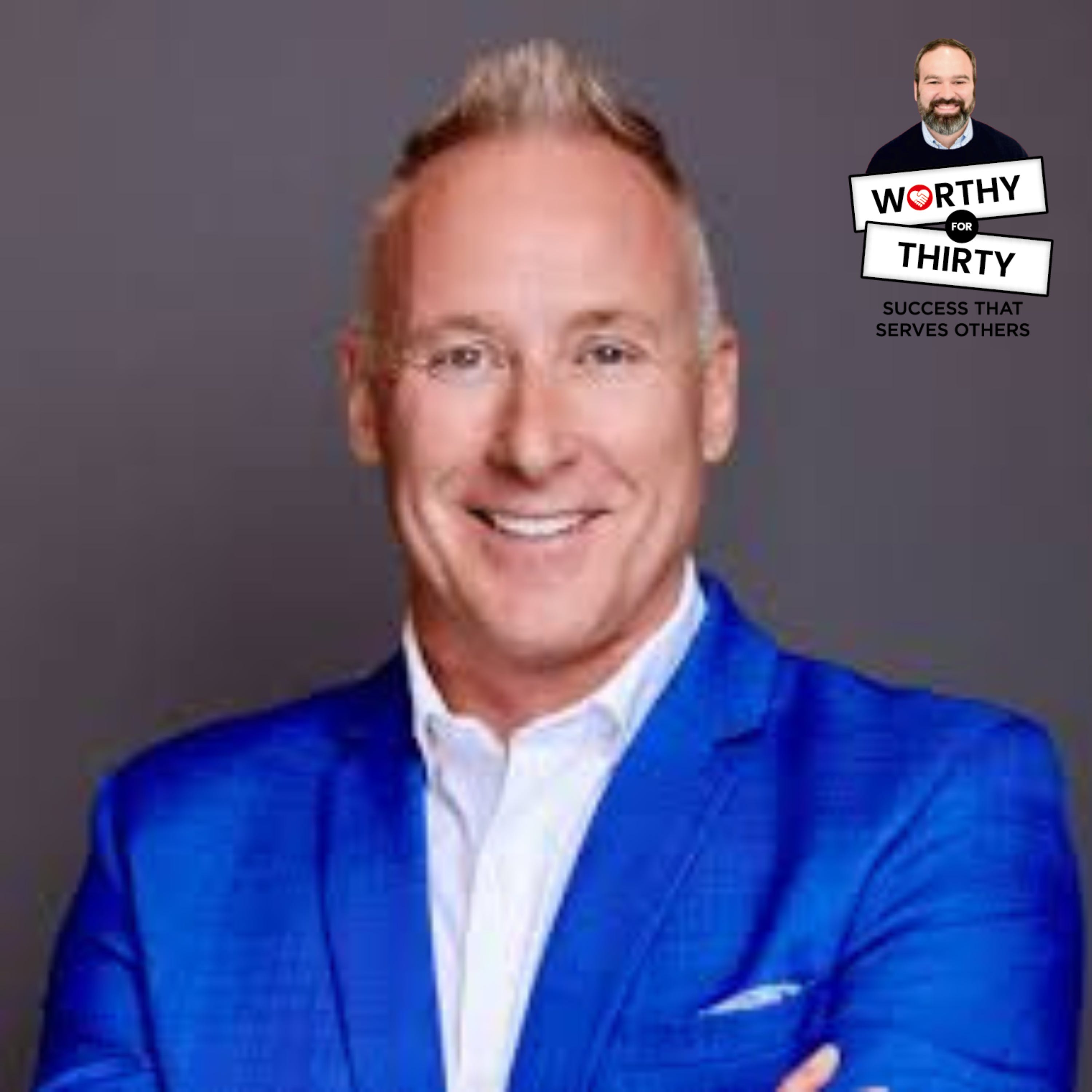
This conversation with Kaleido Life Co-Founder Craig Du Bruyn isn’t really about life insurance; it’s about rethinking where value lives in our lives.
For decades, financial products have trained us to think in straight lines: save now, access later. Protection today, payout tomorrow. But Craig and his co-founder are challenging something deeper. Why is so much of our financial value locked in the future when real life is happening right now?
The origin of Kaleido Life comes from a deeply human moment, a sudden loss that exposed just how transactional and delayed traditional life insurance can feel. That spark led to a bigger question: what if the same system designed to protect your family after you’re gone could actually support you while you’re here?
And that’s where this episode becomes bigger than life insurance.
The Real Insight: Value Isn’t the Problem, Access Is
Craig reframes the entire category with a simple but powerful idea: most people’s wealth isn’t behind them, it’s ahead of them.
Traditional finance looks backward:
Credit scores
Income history
Assets already accumulated
But Kaleido Life is asking: what if we underwrote people based on their future earning potential, not just their past?
That shift, from backward-looking to forward-looking, isn’t just relevant to insurance. It’s already reshaping multiple industries:
Education → Income share agreements (betting on future earnings instead of upfront tuition)
Creator economy → Platforms advancing cash based on projected revenue
Housing → Shared equity models replacing traditional mortgages
Fintech → Companies like Affirm are redefining how consumers access purchasing power
Kaleido Life is applying that same logic to one of the oldest, most untouched categories in finance.
“Ninety percent of most people’s wealth still lies ahead of them, not behind them.” - Craig Du Bruyn
A Familiar Pattern: New Models Feel Obvious… After They Work
Craig’s comparison to Uber is more than a metaphor; it’s a blueprint.
At first:
“Why would I get into a stranger’s car?”
“Why would I trust an app with my transportation?”
Now:
It’s second nature.
The pattern is consistent across disruptive businesses:
Skepticism
Early adopters
Evangelists
Normalization
Craig’s insight is that education often follows experience, not the other way around.
In other words: don’t wait for people to understand—give them something worth experiencing.
Practical Takeaways for Business Leaders
If you’re building, scaling, or trying to disrupt a legacy space or category, this episode is filled with applicable lessons:
1. Find trapped value
Every industry has it: capital, data, time, or access that’s sitting idle.
Your opportunity is to unlock it.
👉 Ask yourself: Where is value being underutilized in my industry?
2. Reframe the category, don’t just improve it
Kaleido Life isn’t making life insurance “better,” they’re reframing what it’s for.
👉 Instead of optimizing features, ask: What is this product actually meant to do, and is that still true?
3. Build for a different entry point
Traditional insurers target people looking for life insurance.
Kaleido Life targets people who need liquidity.
👉 Growth often comes from changing who you’re speaking to, not just what you’re offering.
4. Design for evangelism, not just adoption
Craig isn’t chasing millions of users on day one; he wants thousands who tell others.
This mirrors ideas popularized by author Seth Godin: small groups of believers can move markets.
👉 Ask: Would someone tell a friend about this tomorrow? If not, why?
5. Don’t over-index on skeptics
Every breakthrough sounds wrong at first:
Cars replacing horses
Streaming replacing cable
Remote work replacing offices
👉 If your idea makes everyone comfortable, it’s probably not that new.
The Deeper Shift: From Protection to Possibility
What makes this conversation compelling isn’t just the product; it’s the philosophy.
Traditional life insurance is about protection against worst-case scenarios.
Kaleido Life is betting on something different:
Funding a wedding
Paying down debt
Taking a dream trip
Starting a new chapter
It moves the narrative from “What happens if I die?” to “What becomes possible while I’m alive?”
Why This Matters Now
We’re in a moment where people expect more flexibility from everything:
Work is flexible
Money is flexible
Ownership is flexible
Financial products that don’t evolve toward access + optionality risk becoming irrelevant.
Kaleido Life could be an early signal of where that shift is heading.
Final Thought
The most interesting companies don’t just build new products; they challenge assumptions or long-held beliefs we didn’t even realize we had.
This episode is a reminder that sometimes the biggest opportunity isn’t creating something new…
…it’s unlocking new utility.


