

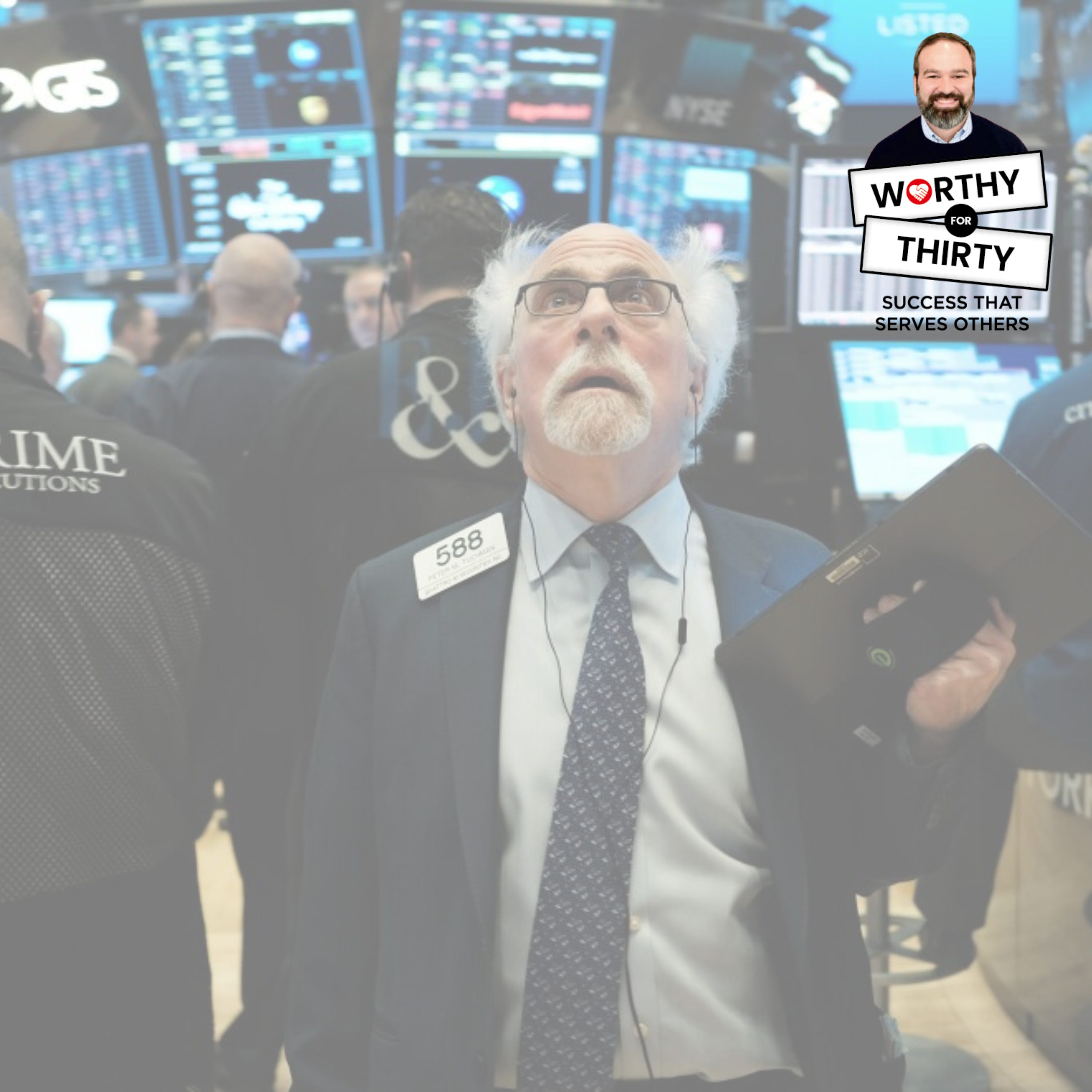
Peter Tuchman — aka the Einstein of Wall Street — has spent more than four decades inside the noise, adrenaline, and emotional whiplash of Wall Street, and this episode captures why that matters now more than ever. In a market shaped by algorithms, viral headlines, AI, prediction markets, and nonstop volatility, Peter offers something increasingly rare: a human take on what actually moves prices, confidence, and behavior.
Fun fact: Peter is the longest-tenured active trader and one of the most photographed traders on the floor of the New York Stock Exchange.
Also to the creators reading this: take the risk. Reach out. Send the cold email. I met Peter at a SXSW panel
This conversation is not just about trading. It is about how people make decisions under pressure, how fortunes are built and lost, why markets punish emotion, and why discipline still wins when the world is moving faster than common sense. Peter’s story runs from his New York City roots and family resilience to the NYSE floor, where he learned that opportunity rewards those who keep showing up.
If you are a founder, investor, creator, or simply someone trying to make better decisions in a noisy world, this episode is worth your time because Peter connects market mechanics with life mechanics. He makes the case that investing is not a get-rich-quick fantasy; it is a long-game discipline, a probability game, and a way to build a legacy instead of buying more stuff.
Peter is not looking backward. Through Wall Street Global Trading Academy, he and his partner, David Green, are training retail traders, both new and seasoned, with structure, mentorship, and risk awareness instead of hype. That matters because the barrier to entry into equities trading is lower than ever, but the barrier to staying in the game is still high.
What makes this episode especially resonant is Peter’s larger perspective: he sees the market as a living organism shaped by war, oil, AI, social media, institutional behavior, retail enthusiasm, and the psychology of fear and greed. He also sees the upside in all of it, especially for younger people willing to learn, adapt, and treat the market like a vocation rather than a casino.
I encourage you to listen to this episode, which will leave you thinking differently about money, attention, risk, resilience, and what it takes to create value in a world that rewards both speed and substance. It is a conversation with practical takeaways, but it is also a reminder that behind every chart is a human story, and behind every winning strategy is a mindset.
“Wall Street is not a get-rich-quick scheme.”
What this means now
The implications extend beyond trading. Peter’s perspective suggests that the winners are the people who can identify signal in noise, control downside, and avoid turning a temporary edge into a permanent loss. In today’s business landscape, that translates to clearer decision-making, faster adaptation, and stronger risk discipline when markets, customers, or platforms suddenly shift.
He also makes a strong case that accessibility changes the game, but not everyone who enters survives it. That reflects what we see in business: lower barriers to entry create more competition, but the people who last are the ones who learn the rules, manage cash flow, and keep their heads when everyone else is chasing the next shiny thing.
Steps to consider
Treat every major decision like a trade: define the upside, downside, and exit before you start.
Build a habit of taking profits or locking in wins earlier instead of waiting for perfection.
Stop confusing motion with progress; not every market move, business trend, or opportunity deserves your capital or attention.
Invest in what you understand and observe in daily life, whether that is consumer behavior, software adoption, or brands people already use.
Separate excitement from conviction. If your thesis cannot survive volatility, it is probably just a mood.
Keep building skills that compound over time: judgment, patience, pattern recognition, and emotional control.
Use setbacks as data, not identity. Peter’s message is that resilience is not optional; it is the price of entry.


