


What Happens When Access Becomes a Strategy?
Some conversations make you think differently about a topic you thought you already understood. This episode did that for me.
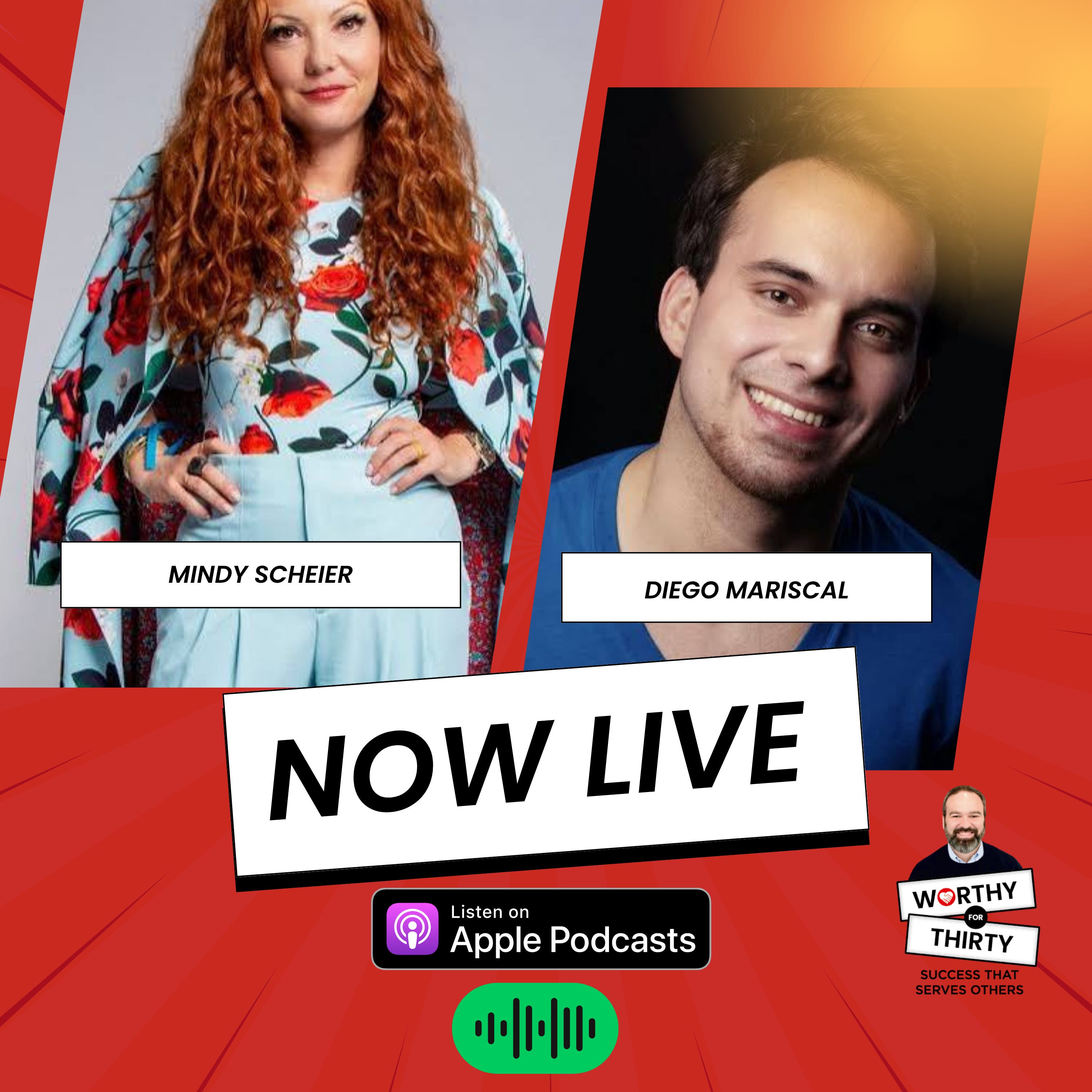
I sat down with Diego Mariscal, founder of 2Gether-International and returning guest, now co-host, Mindy Scheier, founder of Runway of Dreams and Gamut Management, for a conversation that started with disability inclusion but quickly morphed into something much bigger: how mission-driven founders build, lead, and scale when they stop treating access as an add-on.
That idea feels especially relevant right now. In May 2026, the labor force participation rate for people with disabilities ages 16 and older was 23.9%, compared with 67.6% for people without disabilities, and the unemployment rate was 9.1% versus 3.8%. Those numbers are not just statistics. They’re a reminder that too much talent is still being left out of the room.
And that’s exactly why this conversation matters.
Diego shares the personal story behind 2Gether-International and how being born with cerebral palsy shaped his perspective on resilience, adaptability, and entrepreneurship. What stands out is not just the journey itself, but the reframing: the idea that disability can create a kind of leadership muscle that businesses desperately need. Tenacity. Problem-solving. Creative adjustment. The ability to keep moving when the system wasn’t designed with you in mind.
“We set out to create an accelerator that specifically looked at supporting entrepreneurs and allowing us to be successful, not in spite of our disabilities, but in many ways because of our disabilities.” - Diego Mariscal
Mindy brings that same clarity from a different angle. Her story begins with her son Oliver - who has muscular dystrophy - inspired her to push the fashion industry toward something more inclusive and more functional. That effort ultimately helped lead to the first mainstream adaptive clothing line at Tommy Hilfiger and later to her starting Gamut Management, where the work is about helping brands build with people with disabilities, not simply market to them.
What I loved most about this conversation was how practical it became. Diego talked about building accommodation into the budget from the start. Mindy talked about inviting disabled people into product development before something goes to market. Both of them kept coming back to the same core idea: inclusion works best when it is built into the DNA of a company, not added on later as a fix.
That message should resonate with every founder and operator, whether you’re building a startup, managing a team, or trying to make your product more useful to more people. The lesson is simple, but not easy: if you design for the margins, you often end up building something better for the mainstream too.
That manifests everywhere in this episode: in the stories, in the examples, in the way Diego and Mindy challenge the assumptions baked into how businesses think about access. It’s a conversation about entrepreneurship, yes. But it’s also about dignity, systems, and what it really means to build something that lasts.
“When accessibility moves from accommodation to innovation, it doesn’t just change lives, it changes businesses, industries, and what’s possible for everyone.” - Diego Mariscal
If you care about leadership, innovation, accessibility, or mission-driven business, this one is worth your time.
A few things you’ll hear us talk about:
Why disability inclusion is a business advantage, not a charitable endeavor.
How founders can embed access into their operating model from day one.
What adaptive design teaches us about building for more people.
Why the future of entrepreneurship should include more disabled founders, more disabled consumers, and more disabled voices shaping the table.
This episode is for the builders who want to do more than just grow. It’s for the people who want to build in a way that actually reflects the world they live in.
And maybe that’s the bigger takeaway here: the future doesn’t need more companies that simply fit the old model better. It needs companies willing enough (hello, Ryan Berman) to redesign the model itself.


