

A lot of human behavior is decided before anyone makes a conscious choice. Whether an employee seeks help, a woman sees a path to leadership, or a customer gives 43 cents at checkout often depends on how the system around them is designed.
This week, three conversations from the Worthy for Thirty archive seemed newly relevant for the same reason: the smartest organizations don’t just ask people to care. They meet people where they are.
🧠 Mental-health resources need to be made available yet made easy to access and use
Phil Schermer + Stephen Sokoler — “Ep. 21: Phil Schermer, Founder & CEO, Project Healthy Minds and Stephen Sokoler, Founder & CEO, Journey” — March 23, 2023
Revisit the episode
When Phil and Stephen came on the show in 2023, the main point of the episode wasn’t simply that companies should talk about mental health. They argued that CEOs and executive teams need to treat employee mental health as a company priority, normalize conversations around it, and make mental-health care an intrinsic part of how a company operates. Worthy For Thirty
That distinction feels incredibly important. On September 15, the World Health Organization updated its guidance on mental health at work, stressing that leadership commitment, manager training, employee participation, and workplace structures allow people to actually flourish, not simply post or manage benefits sitting on a portal somewhere. World Health Organization: On September 21, the U.S. Department of Labor also published new guidance determined to address insurance practices that restrict access to mental-health and substance-use treatment, with a proposed parity rule expected later this year. Axios
The leadership question is becoming less “Do we offer mental-health resources?” and more “How can we help our employees actually use them?”
The Worthy idea: A benefit isn’t a benefit if friction keeps people from accessing it.
🪑 Cate Luzio: Belonging is something you design
Cate Luzio — “From Banker to Builder: Cate Luzio’s Masterclass on Launching a Community-Driven Business” — October 15, 2025
Revisit the episode
Cate’s approach to building Luminary has always been excruciatingly practical. She and her team removed application barriers, grew the community around the idea that there should be “room at the table,” pushed her employees to challenge her decisions, and treated the people building the company as active community participants, not just staff executing a founder’s vision. Worthy For Thirty
That came to mind this week when Sheryl Sandberg, Meta’s Former COO, argued that women turning down or stepping down from senior corporate roles shouldn’t automatically be construed as declining ambition. She spoke about fewer opportunities, weaker sponsorship and mentorship, caregiving demands, and workplace structures that make advancement less attractive or attainable; Lean In’s research found that women’s interest in top roles rises substantially when they believe their employer genuinely wants women in leadership. Business Insider
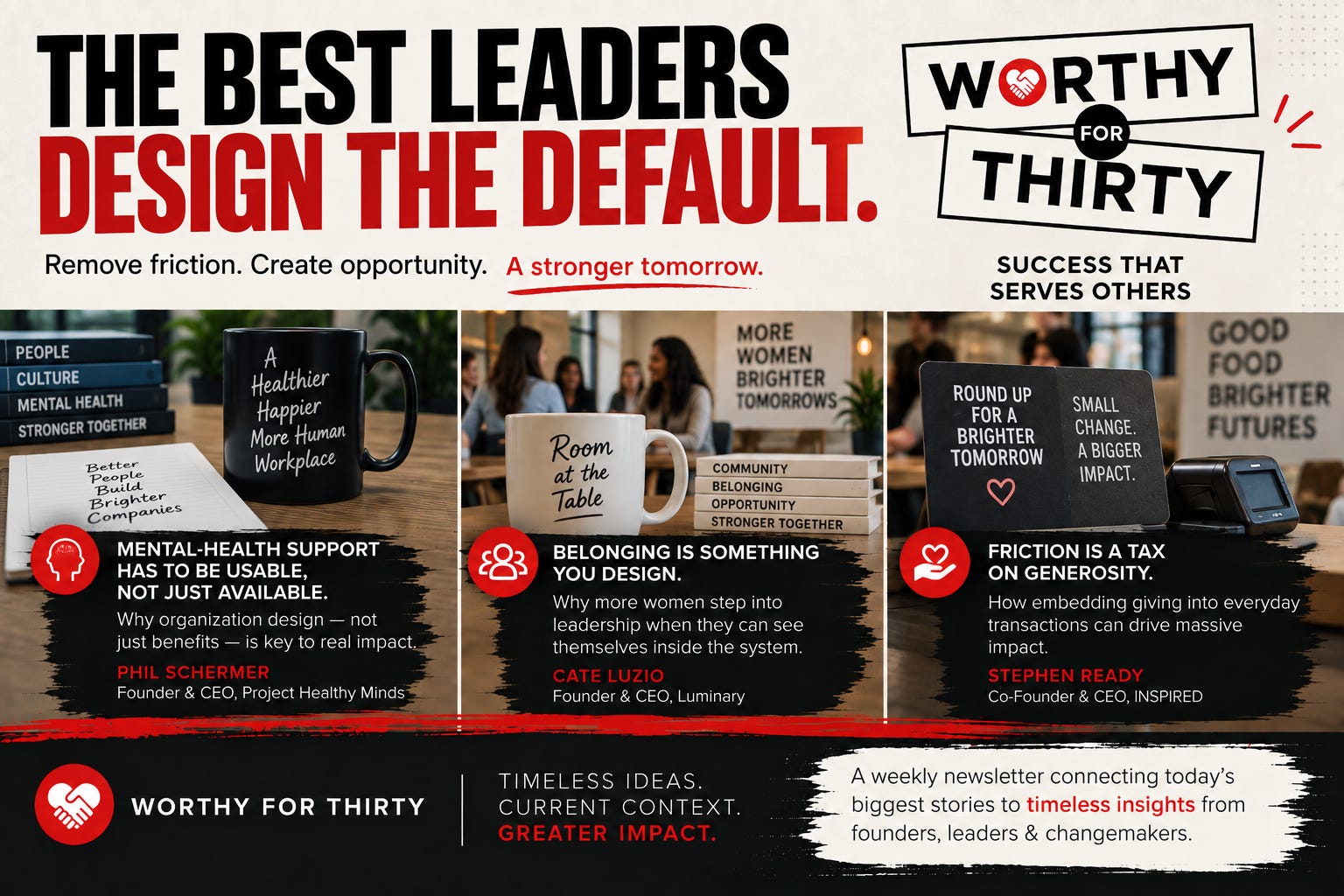
Cate’s perspective is insightful and useful because it shifts the burden from the individual to the design of the environment. Instead of asking why someone isn’t leaning in, leaders should ask whether they’ve created an environment worth leaning into.
The Worthy idea: People are more likely to pursue opportunity when they can actually see themselves inside it.
❤️ Stephen Ready: Friction is a tax on generosity
Stephen Ready — “Ep. 50: Stephen Ready, Co-Founder & CEO, INSPIRED” — October 30, 2024
Revisit the episode
Stephen’s thesis behind INSPIRED was clear: charitable action shouldn’t require consumers to stop what they’re doing, find a nonprofit, and then make a separate donation. INSPIRED was created to make year-round giving frictionless by allowing consumers to give through their existing purchases, and brand engagement allowing brands to go along the ride of supporting their consumers’ favorite causes and nonprofits. Worthy For Thirty
There was quite a remarkable real-world example of that idea this week. On September 14, the Taco Bell Foundation announced a record $32 million in grants to 700 nonprofits, with the program fueled in part by customers choosing to round up their checks. The average Round Up donation is just 43 cents; in 2025, those tiny transactions collectively generated more than $51 million! Taco Bell
That isn’t only a fundraising story. It’s a product-design story: Taco Bell placed generosity directly inside a behavior millions of people were already exuding.
For brands that say purpose is part of the business, that may be the more interesting question: Where can impact live inside the transaction rather than beside it?
The Worthy idea: Make doing good the easiest next click.
🚨 Guest Radar
Mindy Scheier / Runway of Dreams: On September 16, New York State announced that its forthcoming Adaptive Clothing Grant Program is expected to launch in January 2027. The announcement was made at Runway of Dreams’ Fashion Revolution event during New York Fashion Week and will support designers, entrepreneurs, and researchers developing functional, fashionable clothing around the needs of people with disabilities. Empire State Development
Leah Shepherd / Victoria’s Voice Foundation: Victoria’s Voice joined Capital Region Crime Stoppers, Louisiana Blue and Acadian Ambulance on a new East Baton Rouge youth drug-prevention campaign launched September 15. High-school students are creating peer-to-peer PSAs around fentanyl, opioids, vaping and other substances, while LSU student-athletes are helping extend the message to young people and families. WBRZ
Phil Schermer / Project Healthy Minds: On September 18, Project Healthy Minds unveiled programming for its October 8 gala and October 10 free World Mental Health Day Festival in New York, with participants including Karl-Anthony Towns, Terry Crews, Jonathan Haidt and Nina Westbrook. PR Newswire
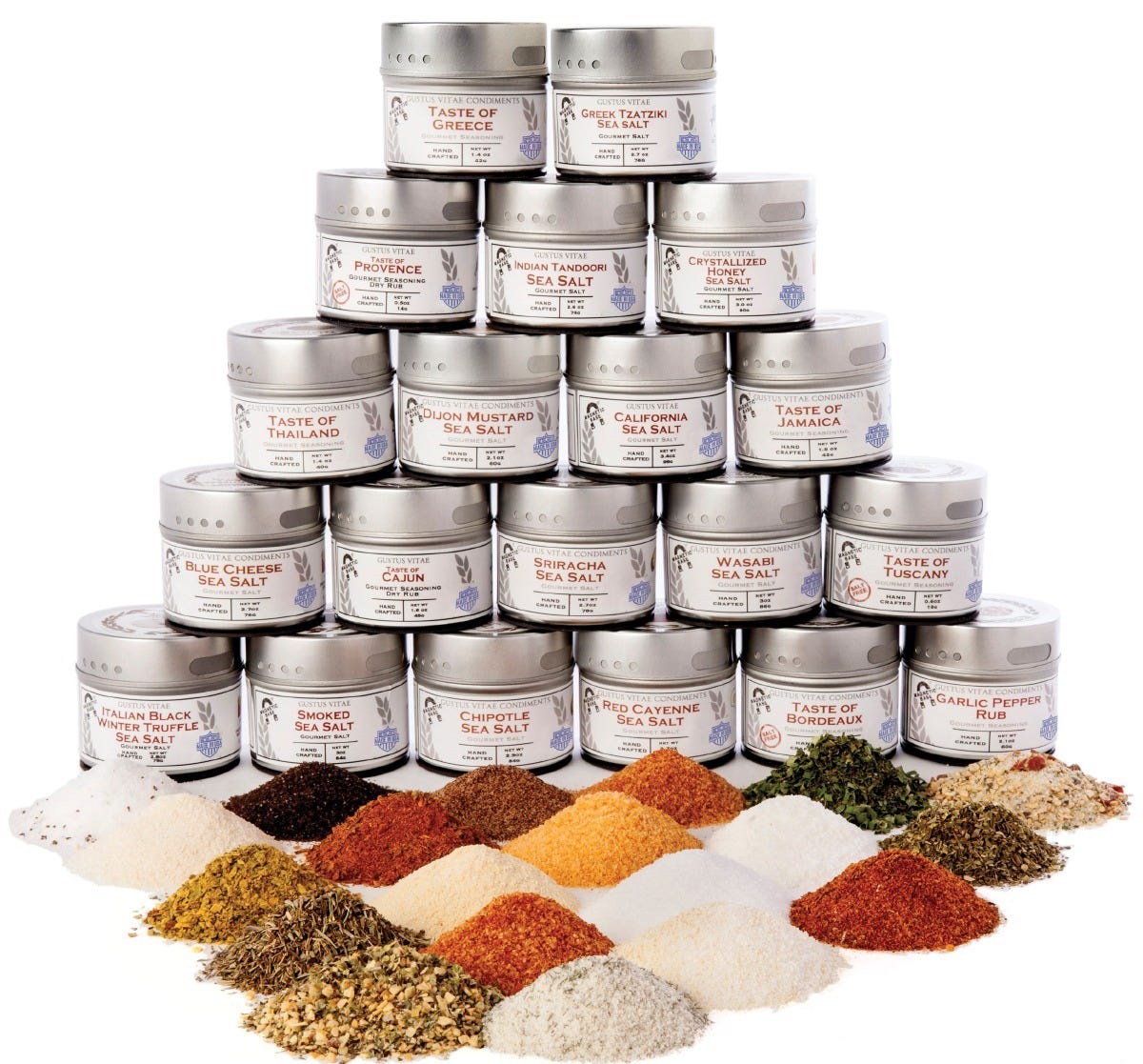
A quick note from one of Worthy for Thirty’s newest sponsors, Gustus Vitae. Long before they became a sponsor, I had the opportunity to sit down with co-founder Frankie Scanlon to talk about how Gustus Vitae has grown from its farmers market roots into a brand built around quality, community, and making cooking more accessible and just plain fun. That conversation, and the way Frankie and his team think about building a business with purpose, made it a no-brainer to support the show. Gustus Vitae crafts small-batch, all-natural seasonings, sea salts, and artisan cane sugars designed to make everyday food better. Click here to shop Gustus Vitae and get 15% off your order + free shipping—and support a brand that supports Worthy for Thirty.
One idea to take with you
Purpose is strongest when it becomes built into the architecture.
If you want more people to ask for help, pursue leadership, or give back, persuasion only gets you so far. Remove the friction. Make the path clear and intuitive. Design the experience around the behavior you say you value.
Because eventually, what an organization believes matters less than what it makes easier for the people it serves to do.