

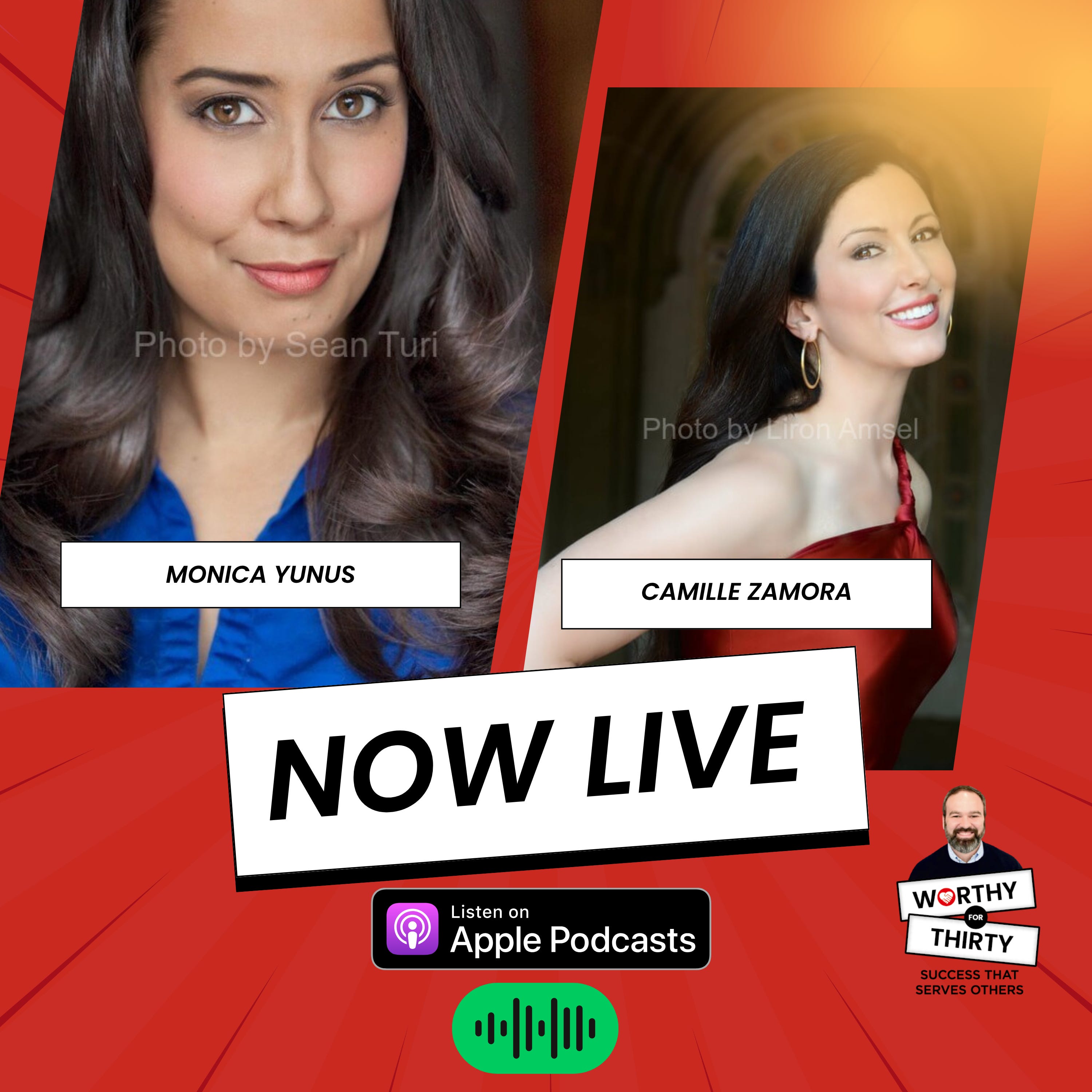
In this episode of the Worthy for Thirty podcast, I sit down with Sing for Hope co-founders Monica Yunus and Camille Zamora for a wide-ranging conversation about creativity, access, public health, and what it really means to build something that endures the test of time. From their origin story in the aftermath of 9/11 to the growth of Sing for Hope’s public pianos, school programs, hospital partnerships, and global arts initiatives, Monica and Camille make a powerful case for why the arts belong not just on stages, but in the everyday places where people live, heal, and connect.
This conversation is about more than music. It’s about arts education, community impact, nonprofit leadership, and the idea that creativity can serve as infrastructure for healthier, more connected communities.
“Creativity isn’t something we consume. It’s infrastructure for healthier communities, stronger connections, and greater human dignity.”
Why this conversation matters
Monica and Camille trace the roots of Sing for Hope back to a moment of crisis, when they began singing for first responders in the days after 9/11. What began as a response to grief became a 25-year mission to bring the power of the arts into public spaces, hospitals, schools, elder care facilities, and communities that are too often left out of cultural life.
We’re drawn to music, all of us as artists, because we’re drawn to light and truth.” - Camille Zamora
That framing matters because it shifts the conversation from “art as enrichment” to “art as necessity.” As they explain in the episode, the arts support health, dignity, connection, and well-being, and they should be treated that way.
What we talk about
In our conversation, Monica and Camille open up about:
How they met at Juilliard and developed a friendship that grew into a mission-driven partnership.
The early experiences that shaped their belief in the power of music and community service.
Why Sing for Hope was born out of crisis, and how that origin still informs the organization today.
How the Sing for Hope Pianos became one of the country’s most recognizable public art projects.
Why they believe the arts are a social determinant of health.
What it takes to build sustainable nonprofit programs that are both beautiful and operationally effective.
How they think about access, creativity, and the role of artists in public life.
A few standout moments
One of the most interesting parts of the conversation is their reflection on how access to the arts shapes a person’s sense of possibility. Monica shares how music was present in her childhood through church, elder care performances, and community events, while Camille talks about how her family’s musical culture and public school music education influenced her path.
Another standout thread is that their effusiveness around the concept of creativity doesn’t have to be reserved for professionals. They referenced doodling, singing in the driveway, trying something new, and permitting ourselves to make art without judgment (work through the cringe!).
For founders and changemakers
If you’re building a nonprofit, a community initiative, or a mission-driven brand, this episode offers more than inspiration. It offers a framework.
Monica and Camille talk candidly about fundraising, scaling, partnerships, and the challenge of keeping a mission intact while building systems that can grow over time, all while remaining mindful of the reason they started 25 years ago. They also share how they think about long-term impact, from public art installations to arts curriculum development and healthcare partnerships. For anyone interested in social impact, arts entrepreneurship, or nonprofit storytelling, this conversation is packed with practical insight.
You can listen to this full episode on Substack or wherever you listen to podcasts.


