

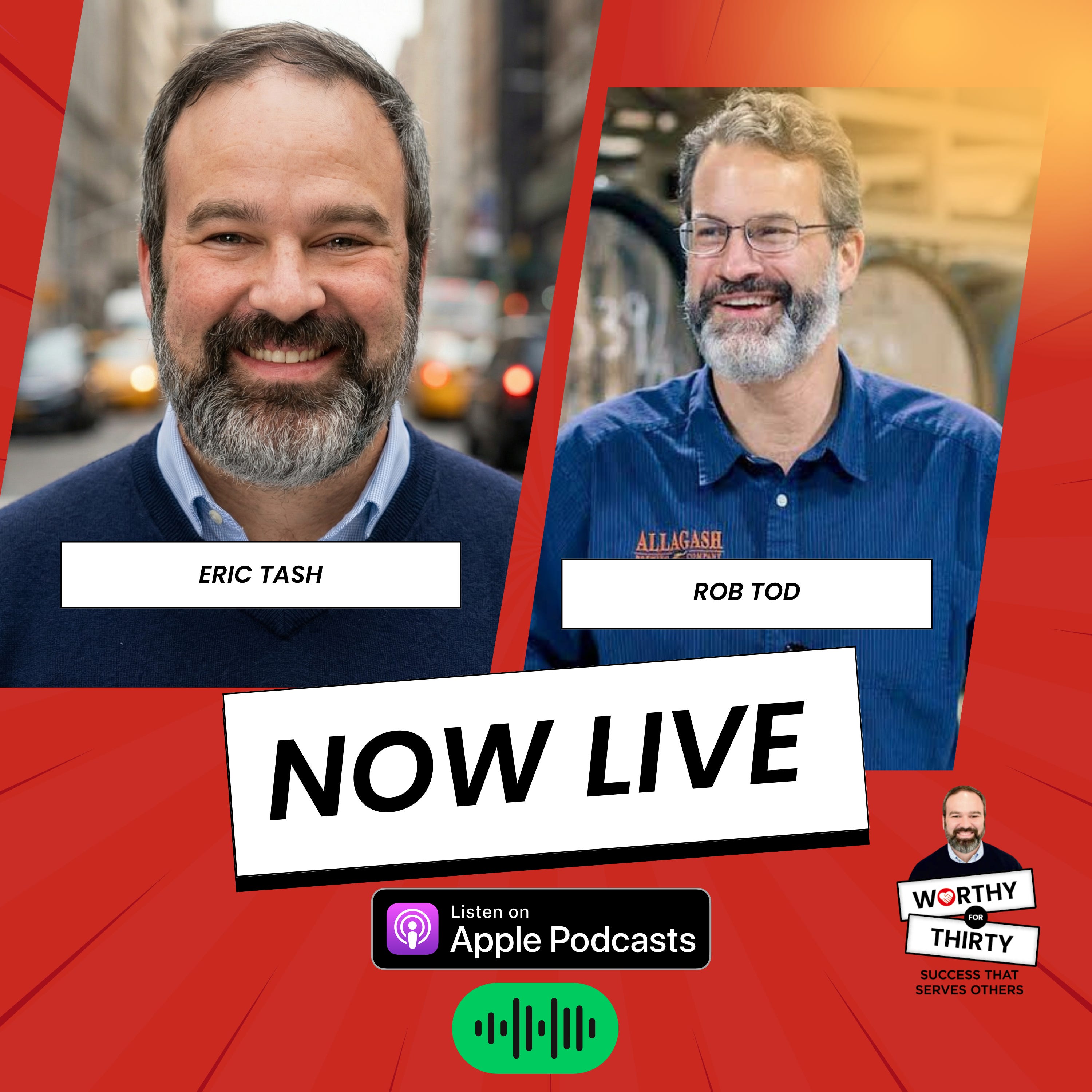
Some founders build a business. Others build a system that keeps getting better long after the startup euphoria fades. Rob Tod, founder of Allagash Brewing Company, belongs in the second category: a leader who turned craftsmanship, discipline, and purpose into a company that has spent three decades proving that sustainability, employee culture, and profitability do not have to compete.
Ahem, doing good while doing well.
I sat down with Rob for a wide-ranging conversation about how Allagash grew from a fledgling brewery built with used equipment into one of the most respected and admired breweries in America. What ensues is not just a story about beer, but a case study in endurance, operational excellence, and values that are actually embedded in the business. The foundation that has allowed Allagash to stand the test of time and competition!
Why this conversation matters
Rob’s origin story is unusually relatable: he graduated from Middlebury with a geology degree, spent time working construction and restaurant jobs, stumbled into brewing, and quickly realized he had found a craft (no pun intended) that combined science, mechanics, creativity, and hard work. He did not begin with a polished master plan; he began with curiosity, grit, and a willingness to build something from the ground up. Perhaps intangibles that successful founders need to tap into when moving from abstract to reality.
Connect the dots!
That origin matters because it helps explain why Allagash never became a company built around trends. Rob describes choosing a Belgian-style wheat beer at a time when very few people even knew what that meant, then spending the first decade hearing, in effect, that the beer was cloudy, strange, and unlikely to sell. The lesson is timeless: if you want to create something durable, the goal is not to be instantly obvious; it is to be worth discovering. Or said even more simply, make something that you like and that you would use or consume. Then decide if it should be shared with the world.
The Allagash model
The transcript makes one thing clear: Allagash is not simply a brewery; it is an operating philosophy. Rob repeatedly returns to the idea of doing the work well, improving the process, and treating the team as the engine of the company rather than a backdrop to it. He talks about investing in raw materials, quality control, equipment, logistics, and culture as interconnected parts of the same system.
That philosophy shows up in Allagash’s latest Benefit Corporation (B-Corp) Report, which breaks down how the company’s sustainability work touches nearly every part of the operation. The report highlights carbon capture that reduces emissions by more than 18,000 pounds annually, a de-aerated water system that saves ingredients and labor, and partnerships that repurpose millions of pounds of spent grain and yeast each year.
The numbers are striking, but the deeper story is that Allagash treats sustainability as an operational discipline rather than a branding exercise. The company says it diverted 98% of brewery waste from landfill, maintained water use at 3.4 gallons per gallon of beer, and redesigned logistics to reduce shipping miles and eliminate unnecessary plastic.
Leadership lessons
What makes Rob’s journey compelling is that he sounds like a founder who has stayed close to the work. He talks about walking the floor, keeping his door open, spending time with employees across departments, and remembering that credibility comes from participation, not posture. That is one reason his leadership feels sincere rather than performative. Being of service to your employees and community is certainly not a tactic. No job is too big or too small for him to lend a hand.
“The best companies aren’t built by finding one breakthrough. They’re built by getting a little better every year for decades.” - Rob Tod
He also makes a strong case for patience. In the early years, Allagash nearly failed, a bank pulled the loan, and the company spent a decade grinding through uncertainty before the market caught up. His response was not to chase the next trend, but to keep refining the product, the process, and the team until the business could stand on its own.
That mindset is especially relevant now, when many founders are tempted to optimize for speed, novelty, or algorithmic attention (e.g., trends). Rob’s case study suggests a different benchmark: build something distinctive enough that it still matters when the market changes around you.
Culture as strategy
One of the most resonant parts of the episode is his discussion of culture. Allagash’s purpose is to “brew with integrity and build community.” It appears in employee benefits, volunteerism, internal innovation, and the company’s habit of giving people across roles a voice in product development and business improvement.
“We’re never resting on our laurels here. We’re always trying to improve.” - Rob Tod
That approach matters because Allagash is not using culture as a soft concept; it is using culture as a strategic advantage. The company’s report notes that employee engagement surveys help guide internal priorities, and the brewery has been named one of Maine’s Best Places to Work multiple times.
He also describes long-term rituals like five-year Belgium trips for employees, which create cross-functional bonding and reinforce the company’s identity. Those are the kinds of details that make a business feel alive, memorable, and human, and they are exactly what separate a transactional company from an enduring one.
What you will leave with from listening
This episode is for founders, operators, nonprofit leaders, and anyone trying to build an organization that lasts. It offers a practical reminder that mission is not what you say; it is what you repeatedly design, measure, reward, and protect.
If you listen closely, you will hear a blueprint for building trust: start with authenticity, stay close to the work, help improve and deepen everyone’s responsibility, and never confuse growth with momentum. Rob Tod’s Allagash story is a rare confluence of humility (his self-awareness is off the charts), precision, and persistence. The kind of story that can change how people think about leadership, not just beer.
We can cheers to that!


